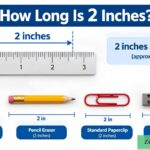
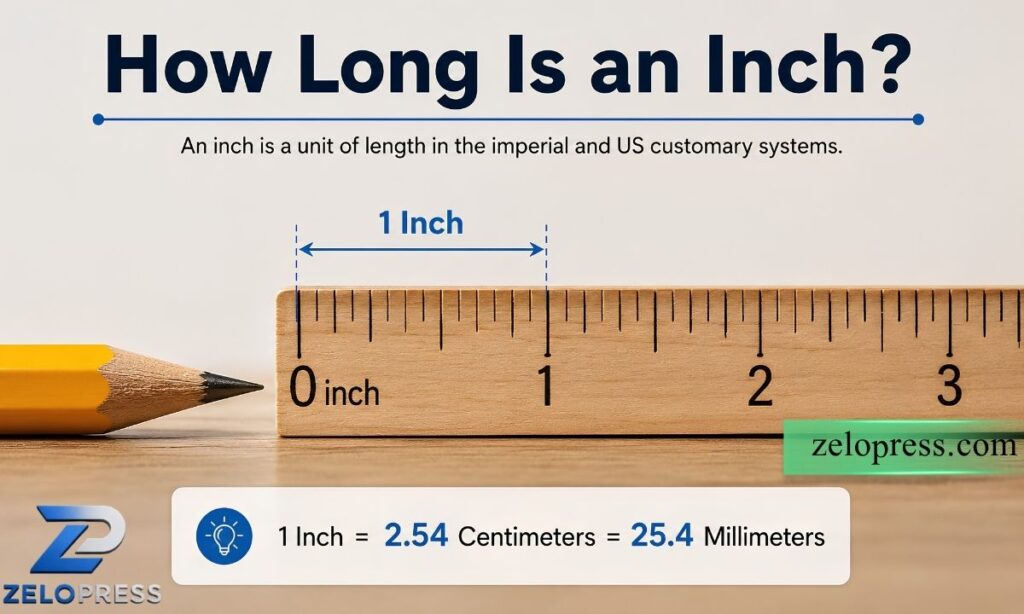

An inch is one of the smallest units in the imperial system, yet it’s everywhere — in tools, hardware, screens, and even your own hand. If you’ve ever tried to picture exactly how long an inch is without reaching for a ruler, you’re not alone. Numbers on a page rarely stick, but real objects do.
In this guide, you’ll get a clear, simple breakdown of what an inch actually measures, how it compares to other units, and ten everyday items you can use as instant visual references — no tape measure required.
Comparison Table: Inch vs Other Units
Here’s a quick snapshot of how an inch stacks up against other common units of length:
| Unit | Equivalent to 1 Inch |
| Centimeters | 2.54 cm |
| Millimeters | 25.4 mm |
| Feet | 0.083 ft (1/12 foot) |
| Yards | 0.028 yd |
| Meters | 0.0254 m |
What Is 1 Inch in cm?
One inch equals exactly 2.54 centimeters. This conversion has been the international standard since 1959, so it never changes regardless of where in the world you’re measuring. If you’re working with a metric ruler and someone tells you something is “an inch,” just look for the 2.54 cm mark.
Read More Measurement ; how long is a inch
Visual Comparison Table: What an Inch Looks Like
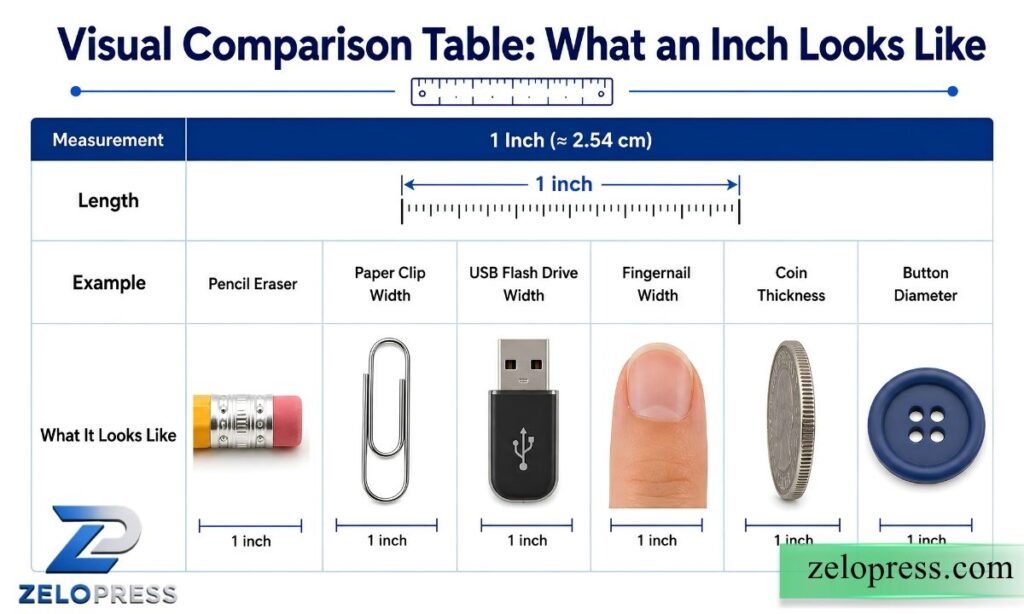
Sometimes a side-by-side visual reference makes more sense than a number. Here’s how an inch compares to familiar objects:
| Object | Approximate Size | How It Compares to 1 Inch |
| Paperclip (folded width) | ~1 inch | Almost identical |
| US quarter (diameter) | 0.955 inches | Slightly smaller |
| Thumb joint (tip to knuckle) | ~1 inch | Roughly identical |
| Dice (one side) | 0.6–0.75 inches | A bit smaller |
| Bottle cap (diameter) | ~1 inch | Roughly identical |
| Lego brick (height, standard) | ~0.4 inches | Smaller (about 1/3) |
How to Measure Inches With Fingers
Your hands are one of the most convenient built-in measuring tools you carry everywhere. Here’s how to use them:
- Look at the tip segment of your thumb, from the first knuckle to the fingertip — for most adults, this is very close to 1 inch.
- Use your index finger’s first segment (from fingertip to the first joint) as a second reference point.
- Compare an object side-by-side with this segment to estimate its length.
- For longer measurements, count how many thumb-widths fit across the object.
This method won’t replace a ruler for precise work, but it’s a reliable way to estimate on the go.
A Standard Paperclip
A classic Gem-style paperclip measures almost exactly 1 inch across its shorter, folded width. Since paperclips are standardized across manufacturers and sit in nearly every desk drawer, they’re one of the most reliable pocket-sized references for this measurement.
The Width of a Quarter Coin
A US quarter measures 0.955 inches in diameter — close enough to round to a full inch for quick visual estimates. Coin-based comparisons work well because quarters are consistent in size and easy to find in any pocket or wallet.
The Length of a Thumb Joint
The top joint of an adult thumb, measured from the knuckle to the tip, comes very close to 1 inch for most people. This is arguably the most convenient reference of all, since it’s a measuring tool you literally carry with you at all times.
A Dice (One Side Length)
A standard six-sided die used in board games typically measures about 0.6 to 0.75 inches per side, making it slightly smaller than a full inch but still a helpful small-scale comparison for visualizing this length.
How Long Is an Inch of Hair
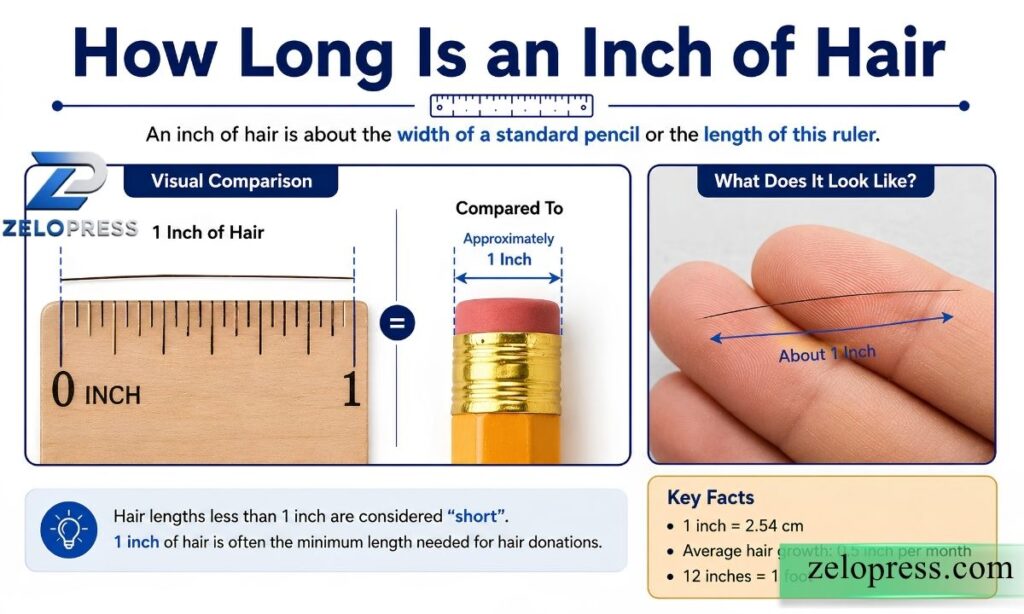
When it comes to hair growth, one inch represents roughly two months of average growth, since hair typically grows about half an inch per month. So if a hairstylist tells you they’re trimming “an inch” off your length, they’re removing about two months’ worth of growth — noticeable, but not dramatic.
The Diameter of a Bottle Cap
Most standard plastic and metal bottle caps measure close to 1 inch across. Since bottles are part of daily life, this makes for one of the easiest and most repeatable visual comparisons available.
A USB Flash Drive Connector
The metal connector end of a standard USB-A flash drive measures approximately 1 inch long. Because this shape is so recognizable, it’s a handy modern-day reference, especially for anyone working with electronics or computer accessories.
The Width of an Adult Finger
The width of an average adult finger (excluding the thumb) typically falls between three-quarters of an inch and a full inch. While it varies slightly from person to person, placing a finger sideways against an object is a common and practical way to estimate width in daily situations.
A Lego Brick Height
A standard Lego brick stands roughly 0.4 inches tall on its own, meaning it would take about two and a half stacked bricks to reach a full inch. This makes Legos a fun, precise way to demonstrate small-scale measurements, especially for kids learning about size.
The Length of a Sewing Pin Head Section
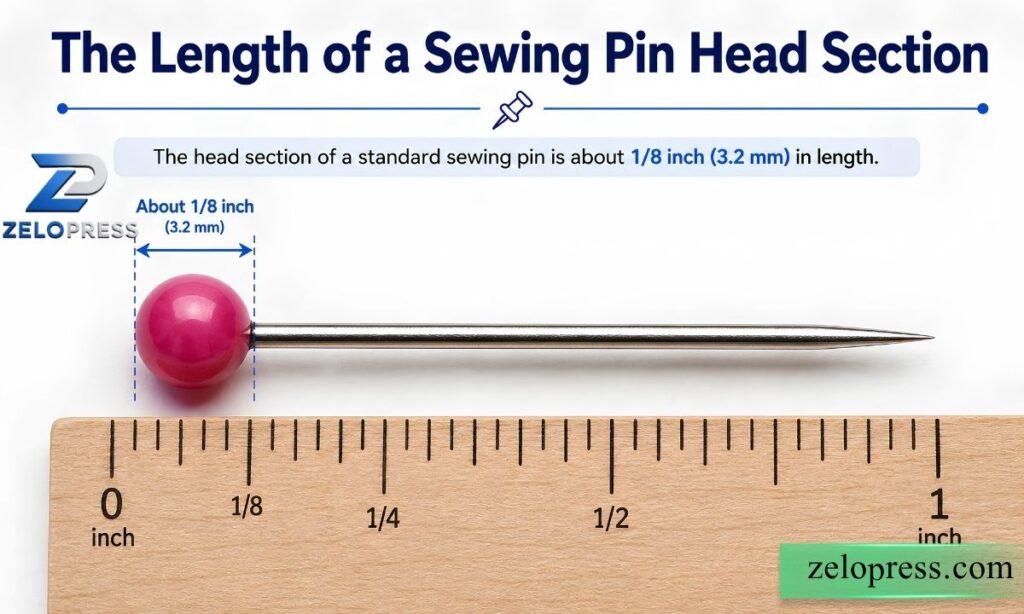
The head and upper shaft section of a standard sewing pin, from the tip of the head down a short distance, often measures close to an inch when combined with a bit of the pin’s body — a small but useful reference for anyone working with fabric or crafts.
A Small Key Width
Many small keys, like those used for padlocks, mailboxes, or luggage locks, measure close to 1 inch across the widest part of the head. Since keys are something almost everyone carries, this makes for an easy real-world comparison.
Read More Measurement ; how long is a inch
FAQs
How long is 1 inch in fingers?
One inch is roughly equal to the width of one adult finger, or the length of the top segment of an adult thumb from knuckle to tip.
How does 1 inch look like?
Visually, 1 inch looks like the width of a bottle cap, the folded width of a paperclip, or the top joint of a thumb — small enough to fit within a fingertip’s width.
How to find 1 inch without a ruler?
Use your thumb’s top joint, a paperclip, a quarter coin, or a bottle cap — all of these measure close to 1 inch and can serve as quick estimation tools.
How to measure 1 inch by hand?
Place your thumb’s top segment (knuckle to tip) against the object you’re measuring. For most adults, this segment closely matches 1 inch in length.
How many fingers is 2 inches?
Two inches is roughly equal to two adult finger widths, or about two thumb-joint lengths placed end to end.
Conclusion
An inch may be small, but it’s one of the most practical measurements to understand visually. From the paperclip on your desk to the quarter in your pocket to your own thumb joint, you already have several built-in references for this length. Next time you need to estimate an inch without a ruler nearby, just glance at your hand — chances are, the answer is right at your fingertips.