
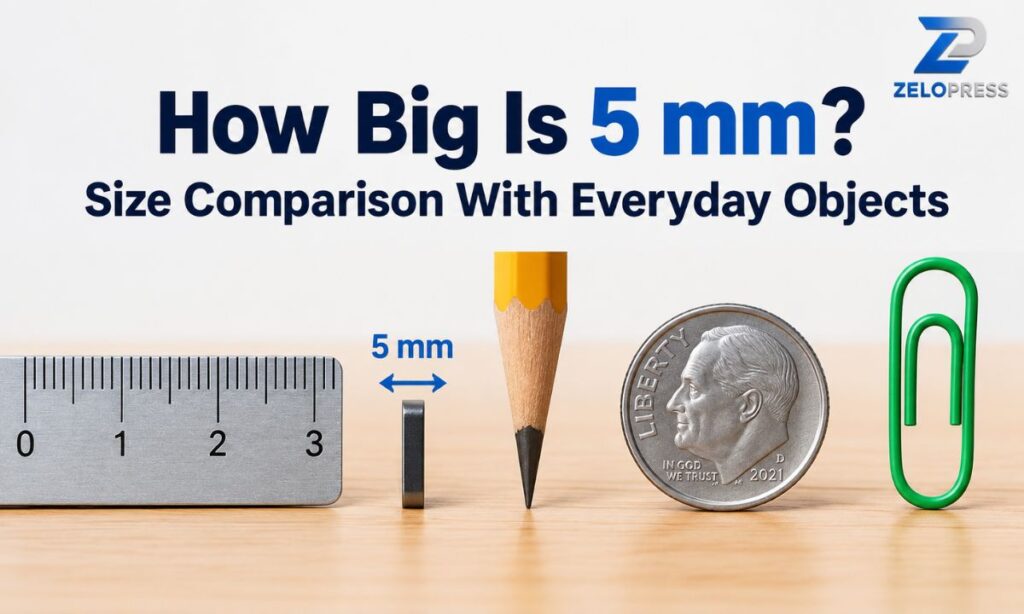

Five millimeters doesn’t sound like much, but it’s one of the most common measurements you’ll run into — in jewelry, tools, medical reports, and product listings online. If you’ve ever squinted at a screw diameter or a bead size and wondered what that number actually looks like in real life, you’re not alone.
This guide breaks 5mm down into simple, visual comparisons so you can picture it instantly, without pulling out a ruler every time.
How Big Is 5mm?
5 millimeters equals 0.5 centimeters or about 0.197 inches — just under a quarter of an inch. On a standard ruler, it sits exactly halfway between the zero mark and the 1 cm line.
It’s small enough to disappear if dropped on a carpet, yet large enough to see clearly and hold between two fingers. Think of it as roughly the width of a pea or a pencil eraser — noticeable, but not bulky.
Millimeters matter because they offer precision that inches can’t. In fields like jewelry making, electronics, and medicine, a difference of even 1-2mm changes how a part fits or how a diagnosis is read.
How big is 5 mm tumor
In a medical context, a 5mm tumor or nodule is roughly the size of a small pea or an eraser tip. It’s large enough to be detected on imaging scans like a CT or ultrasound, but still considered small compared to tumors measured in centimeters. Doctors often track growths this size closely, since early detection at 5mm can make a meaningful difference in treatment options. If you’ve received a report mentioning a 5mm finding, it’s always best to discuss the specifics with your physician rather than relying on general comparisons.
How to Estimate 5mm Without a Ruler
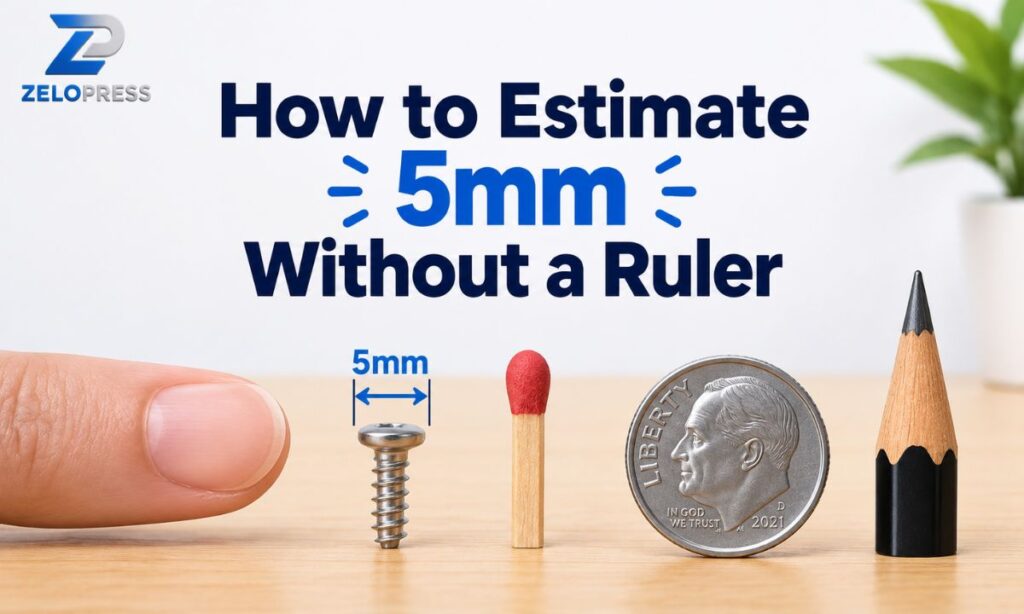
Not every situation gives you access to a measuring tool. Fortunately, there are quick, reliable ways to estimate 5mm using things you already have on hand.
Read More Measurement : how big is 5 mm
5 mm size example
A simple example: the tip of a standard pencil, a green pea, or the width of a shirt button are all close to 5mm. Keeping one mental reference point — like a pea — makes it easy to compare other objects to it on the fly.
Using Your Fingers
- The width of a fingernail corner is often close to 5mm.
- A pinch between your thumb and index finger, when barely open, mimics this gap fairly well.
- This method isn’t exact, but it’s useful for quick, rough estimates when shopping or crafting.
Using Coins or Cards
Coins are a handy reference because their sizes are fixed and consistent worldwide.
- Stack about five standard credit or debit cards together — that thickness is close to 5mm.
- A US dime is about 1.35mm thick, so roughly four stacked dimes approximate 5mm in height.
- Coin diameters, on the other hand, are much larger than 5mm, so they’re better used for thickness comparisons than width.
Using Everyday Objects
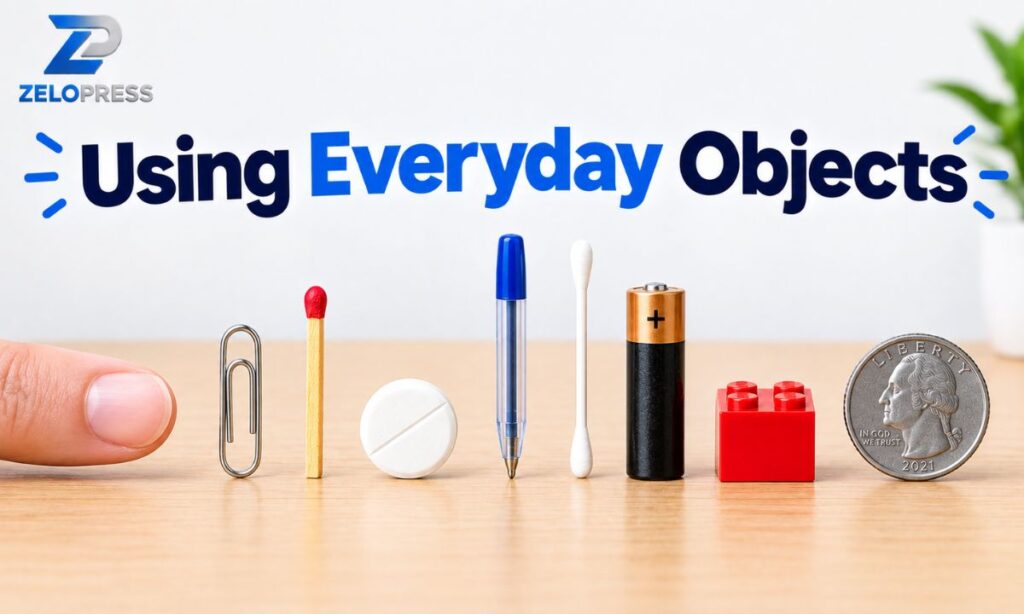
Household items give the most intuitive sense of scale because you already know how they feel in your hand:
- A small button
- A craft bead
- A pencil eraser
- A short grain of rice
Any of these can act as a quick, no-tools-needed reference for 5mm.
Quick Comparison Table

| Object | Approximate Size | Comparable to 5mm? |
| Green pea | 5–6mm diameter | Very close |
| Pencil eraser | 5mm width | Very close |
| Craft bead (small) | 4–5mm | Very close |
| US Dime (thickness) | 1.35mm | Much thinner |
| US Dime (diameter) | 17.9mm | Much larger |
| Fingernail corner width | ~5mm | Close estimate |
| Standard button | 5–8mm | Slightly larger |
| Grain of rice | 4–5mm long | Very close |
9 Everyday Objects That Are About 5mm
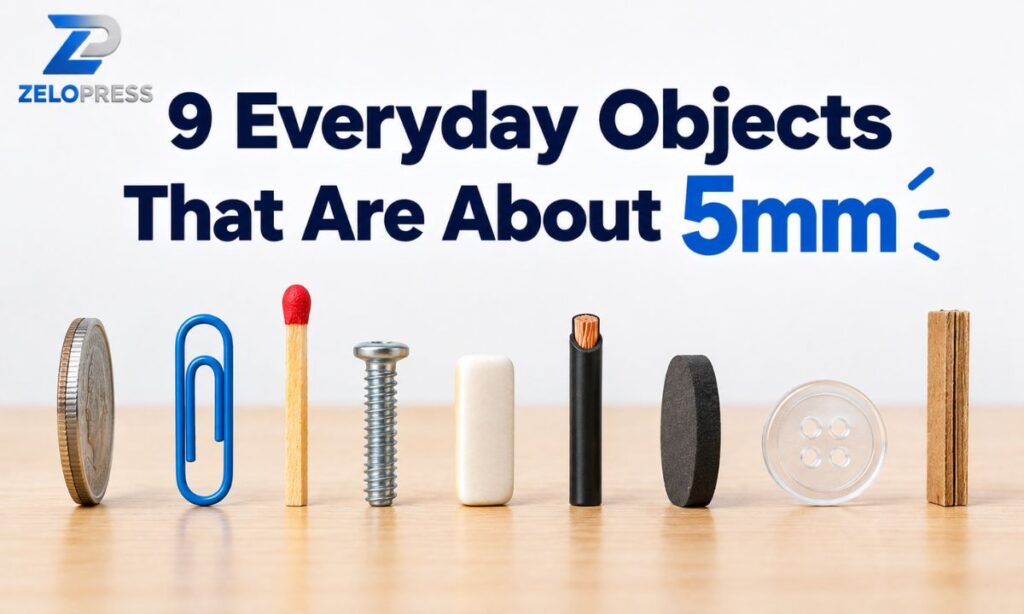
Sometimes the fastest way to understand a measurement is to line it up against things you already recognize. Here are nine common objects that hover right around 5mm.
Green Pea Diameter
A medium-sized green pea is one of the most frequently used comparisons for 5mm, and for good reason — it’s round, familiar, and close to this exact width. Next time you’re cooking, take a second to notice just how small that measurement really is.
Pencil Eraser Width
The pink eraser on the end of a standard pencil is typically about 5mm wide. Since almost everyone has handled a pencil, this comparison works well as an instant mental reference.
Small Craft Bead
Beads used in bracelets and DIY jewelry are frequently sized around 5mm. They’re popular in this range because they’re large enough to string easily but small enough to keep a delicate, refined look.
Headphone Jack Opening
The opening of a standard 3.5mm headphone jack, along with the surrounding plastic housing, brings the total width close to 5mm. It’s a good comparison for anyone picturing small circular openings.
Tiny Button Width
Small shirt or craft buttons, especially the ones used on baby clothes or delicate garments, often measure close to 5mm across. Larger coat buttons are noticeably bigger.
Thick Cable Width
A slightly thick charging cable or a section of coated wire commonly measures around 5mm in diameter. This is a useful comparison for anyone working with electronics or DIY repairs.
Small Marble Size
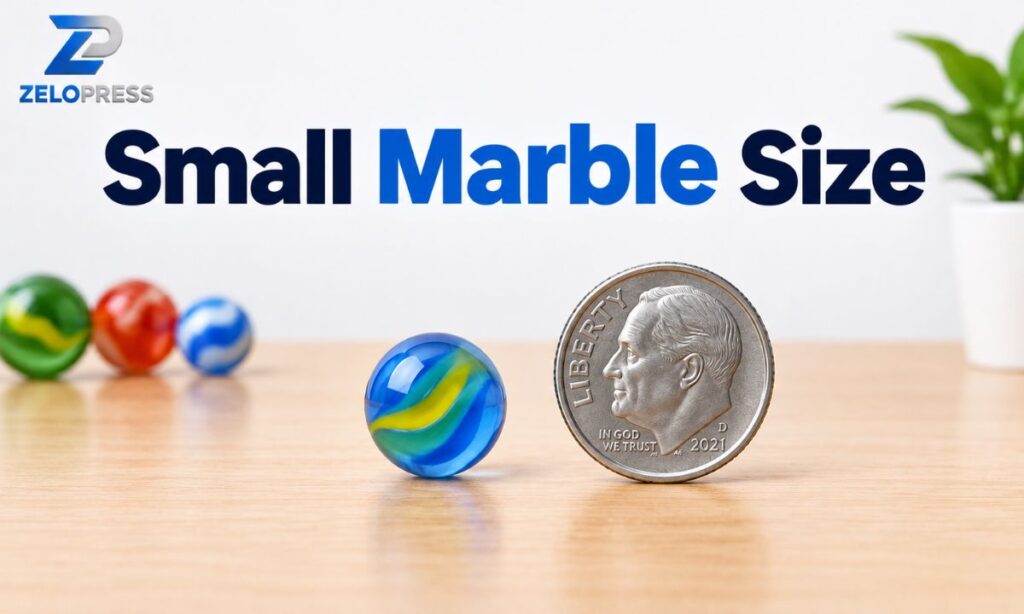
Miniature marbles, sometimes used in games or crafts, are often close to 5mm — smaller than the standard marbles most people picture, but still round and easy to visualize.
Watch Crown Width
The small crown used to adjust time on a wristwatch is frequently around 5mm wide. It’s a helpful comparison for anyone shopping for replacement watch parts.
Coarse Gravel Piece
A single piece of coarse gravel or aquarium substrate often falls close to 5mm. This comparison is especially useful for landscaping, construction, or fish tank projects where particle size matters.
Read More Measurement : how big is 5 mm
FAQs
How big is 5 mm visually?
Visually, 5mm is about the width of a green pea or a pencil eraser — small but clearly visible without any magnification.
What object is the size of 5 mm?
A craft bead, a small button, or a pencil eraser are all commonly used objects that closely match 5mm in width.
What does 5mm look like?
It looks like a small notch just past the zero line on a ruler — roughly half the width of a centimeter, or about a fifth of an inch.
What does 5mm look like on a ruler?
On a metric ruler, 5mm sits exactly halfway between the 0 and 1cm marks, usually shown as a slightly longer tick line between the smaller millimeter marks.
How do I measure 5 mm?
The most accurate way is a ruler, tape measure, or digital caliper. Without tools, compare the item to a pea, eraser, or small bead for a rough estimate.
Summary
Five millimeters may be small, but it shows up everywhere — from jewelry and electronics to medical measurements and home repairs. Once you anchor it to something familiar, like a pea, an eraser, or a stack of cards, you’ll never need to second-guess a 5mm measurement again. Keep one or two of these comparisons in mind, and you’ll be able to estimate this size accurately, ruler or not.