

Eight millimeters is one of those measurements that’s easy to overlook but shows up constantly — in jewelry, electronics, hardware, and everyday household items. If you’ve ever wondered exactly how big 8mm is without pulling out a ruler, this guide will make it click instantly.
Below, you’ll find simple conversions, quick estimation tricks, and a full list of familiar objects that measure close to 8mm, so you can picture this size anytime you need it.
How Big Is 8mm?
Eight millimeters is a small but noticeable measurement — slightly smaller than 1 centimeter and a bit larger than a quarter of an inch. It’s big enough to see and feel clearly, but small enough that it’s often used for compact parts like beads, screw heads, and cable tips.
To put it simply: 8mm sits right between a pencil’s diameter and the width of a small button — small in the grand scheme, but far from microscopic.
Because it falls in this “in-between” zone, 8mm is one of the most commonly used sizes in manufacturing. It’s large enough to be functional (strong enough for hardware, comfortable enough for jewelry) but small enough to stay compact and lightweight. That’s exactly why you’ll find it repeated across so many unrelated categories — from tools to accessories to food.
Why 8mm Is Such a Common Size
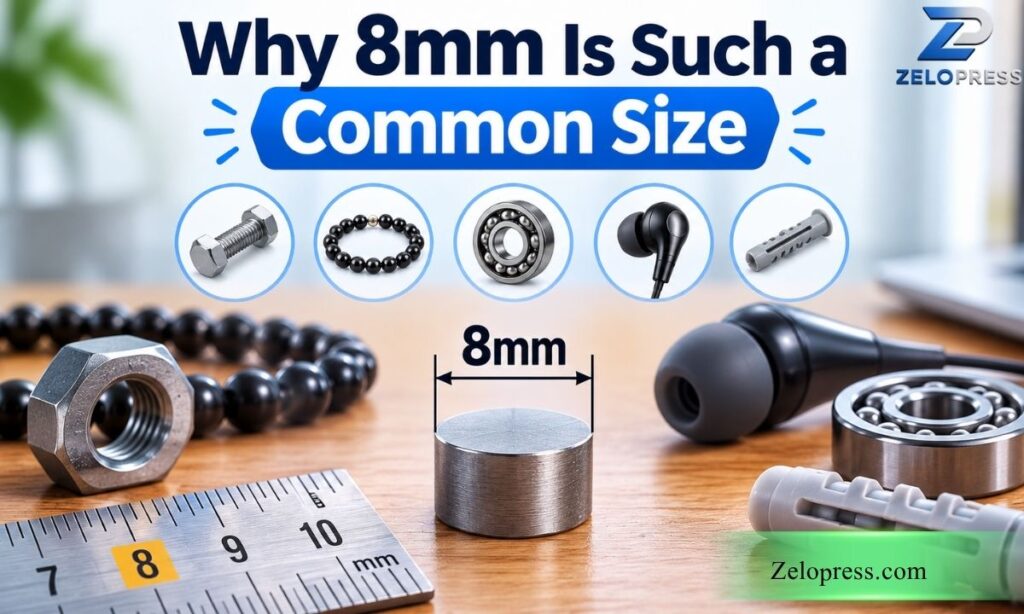
If you start paying attention, you’ll notice 8mm popping up far more often than most other millimeter measurements. There’s a practical reason for this. Many international hardware standards, jewelry sizing charts, and cable manufacturing specs are built around round, easy-to-produce numbers, and 8mm happens to sit at a sweet spot for several industries at once.
- Hardware and tools: Socket sets, wrenches, and screw heads frequently use 8mm because it comfortably fits a human grip while offering solid torque strength.
- Jewelry: Beads and gemstones at 8mm are large enough to be visually appealing without overwhelming a bracelet or necklace design.
- Electronics: Cable tips and connectors converge around 8mm because it balances durability with a slim profile that fits most ports and sockets.
This overlap across industries is part of why 8mm feels so familiar even if you’ve never consciously measured anything.
Also Read This Mesurement ; 8 mm size
Ways to Estimate 8mm Without a Ruler

You don’t always need a measuring tool on hand. Here are a few reliable ways to estimate 8mm using things you already have.
Using Your Fingers
The tip of an adult pinky finger, measured across its width, is often close to 8mm. Comparing an object side-by-side with the width of your smallest finger gives a fast, rough estimate. This trick works well in situations where you need a quick approximation — like checking if a bead or screw looks about right before buying a proper tool.
Using Common Objects
Everyday items make excellent stand-ins for a ruler:
- A standard pencil’s diameter (roughly 7–8mm)
- A green pea
- A small button
- The width of a charging cable tip
Placing an object next to one of these gives you an instant visual comparison. Because these items are found in almost every home, this method is often faster than searching for an actual ruler.
Using Coins and Accessories
Some coins and small accessories are close to 8mm in thickness or diameter, making them useful pocket-sized references. Stacking a couple of coins or comparing a bead against a coin’s edge can help confirm whether something is close to this size. This is especially handy for jewelry makers who need a fast way to double-check bead sizes while shopping or crafting.
What Is 8mm in cm?
Eight millimeters equals 0.8 centimeters. Since there are 10 millimeters in every centimeter, 8mm is simply eight-tenths of a centimeter — just shy of the 1cm mark on a metric ruler. This makes it easy to visualize: picture a full centimeter, then shave off a small sliver, and you’re looking at 8mm.
8mm Size Converter
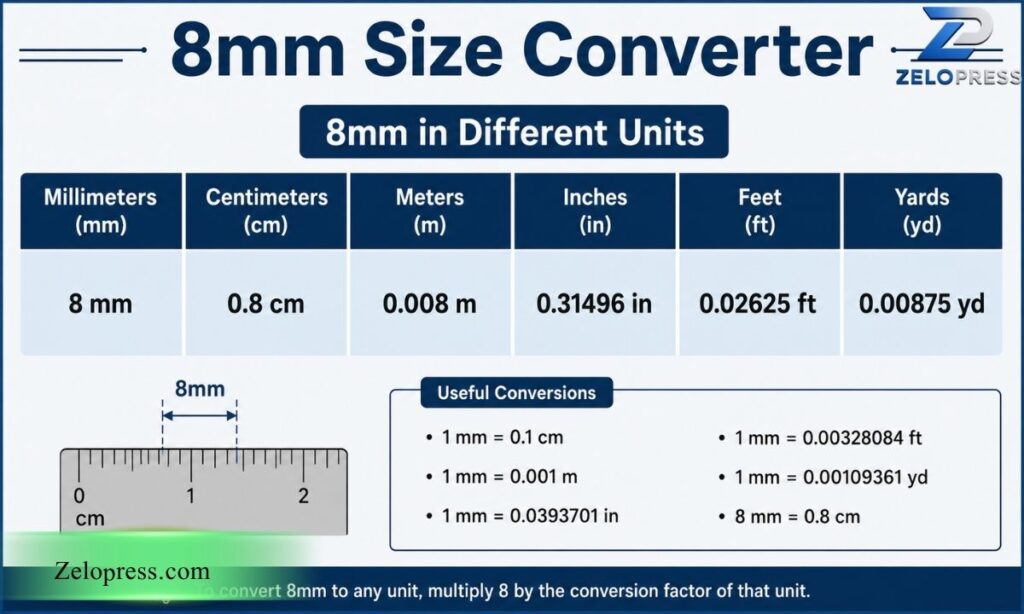
Here’s a quick breakdown of 8mm across common units:
| Unit | Equivalent to 8mm |
| Centimeters | 0.8 cm |
| Inches | 0.315 in |
| Micrometers | 8,000 µm |
| Meters | 0.008 m |
8mm to Inches Fraction
In fractional terms, 8mm is close to 5/16 of an inch (0.3125 inches), which rounds to approximately 0.315 inches. It falls between 1/4 inch (6.35mm) and 3/8 inch (9.525mm), making it a common in-between size for hardware, jewelry, and small parts.
This is particularly useful to know if you’re working with tools or hardware manufactured in the US, where measurements are usually given in inches rather than millimeters. Knowing that 8mm sits almost exactly at 5/16″ lets you quickly cross-reference sizes without doing the math every time.
Common Things That Are 8mm Big

Here are everyday objects that measure close to 8mm, giving you plenty of real-world references.
Pencil Eraser Width
The eraser tip on a standard wooden pencil often measures close to 8mm across. Since pencils are found in nearly every home, school, and office, this makes for one of the easiest and most reliable comparisons available.
Small Pearl Bead
Pearls used in jewelry making, particularly for bracelets and necklaces, are commonly sized around 8mm in diameter. This size is popular because it’s noticeable without being bulky, making it a favorite for both classic and modern jewelry designs.
USB Cable Tip Width
The connector tip on many charging cables and small USB accessories measures close to 8mm wide. Since almost everyone owns a charging cable, this is a handy, always-available reference point.
Pea Diameter
An average green pea measures close to 8mm across. Because peas are round and familiar from everyday cooking, they offer a simple and relatable way to picture this measurement.
Standard Button Thickness
Many clothing buttons, especially the slightly raised or domed varieties, measure close to 8mm in thickness. Next time you’re buttoning a shirt or coat, take a quick look — you may already be holding an 8mm reference.
Small Screw Head
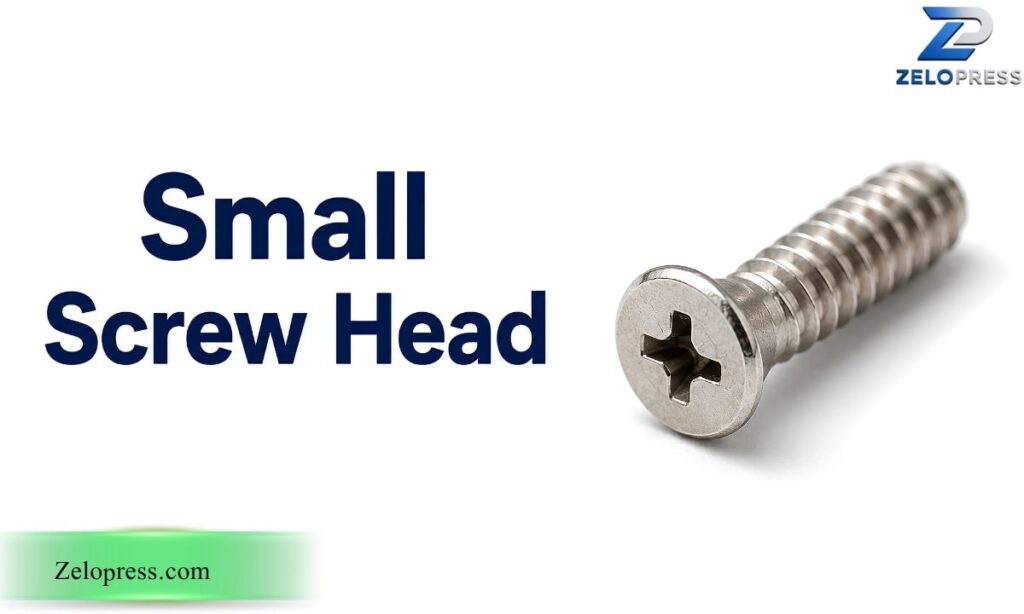
The head diameter on many small screws, particularly those used in electronics, furniture assembly, and household repairs, often measures close to 8mm across.
Earbud Silicone Tip
The silicone tip that fits into your ear on many wired and wireless earbuds is commonly sized around 8mm in diameter, balancing comfort with a secure fit.
Marker Cap Thickness
The cap on a standard marker or highlighter, measured across its width, often comes close to 8mm, making it another easy comparison you likely have within reach right now.
Jewelry Ring Band Width
Men’s wedding bands and statement rings are frequently designed with an 8mm band width, offering a substantial, noticeable look without becoming uncomfortably wide.
Small Watch Adjustment Dial
The crown or adjustment dial on many analog watches, used for setting the time or date, is commonly sized around 8mm in diameter — small enough to fit the watch case, but large enough to grip comfortably.
AA Battery Cap Diameter
The small metal cap at the top of an AA battery is often close to 8mm across. It’s a size most people have handled without ever thinking about its exact measurement.
Guitar Pick Thickness (Heavy Gauge)
Some heavy-gauge guitar picks measure close to 8mm in width along their narrowest point, giving musicians a tactile, familiar reference for this size.
Standard Hex Nut Width
Many small hex nuts used in furniture assembly and light machinery measure close to 8mm across their flats, making them a practical hardware-store comparison.
Chocolate Chip Size
A standard chocolate chip used in baking measures close to 8mm across, offering a sweet and surprisingly accurate kitchen-based reference point.
Also Read This Mesurement ; 8 mm size
FAQs
What is the actual size of 8 mm?
8mm equals 0.8 centimeters or approximately 0.315 inches — just under a third of an inch.
How big does 8mm look?
Visually, 8mm looks close to the width of a pencil eraser, a small pea, or a standard button.
What does 8 mm look like in inches?
In inches, 8mm is approximately 0.315 inches, or close to 5/16 of an inch.
How thin is 8 mm?
8mm is thin enough to fit comfortably between two fingers, similar to the thickness of a stack of two to three credit cards.
How do you measure 8 mm?
Use a metric ruler or digital calipers, lining the object up against the millimeter markings until you reach the 8mm mark for an accurate reading.
Summary
Eight millimeters may be small, but it’s a measurement that appears constantly in daily life — from the pearl beads in your jewelry box to the eraser on your pencil. Once you connect this size to familiar objects like a pea, a button, or a cable tip, estimating 8mm becomes second nature, even without a ruler in hand.