
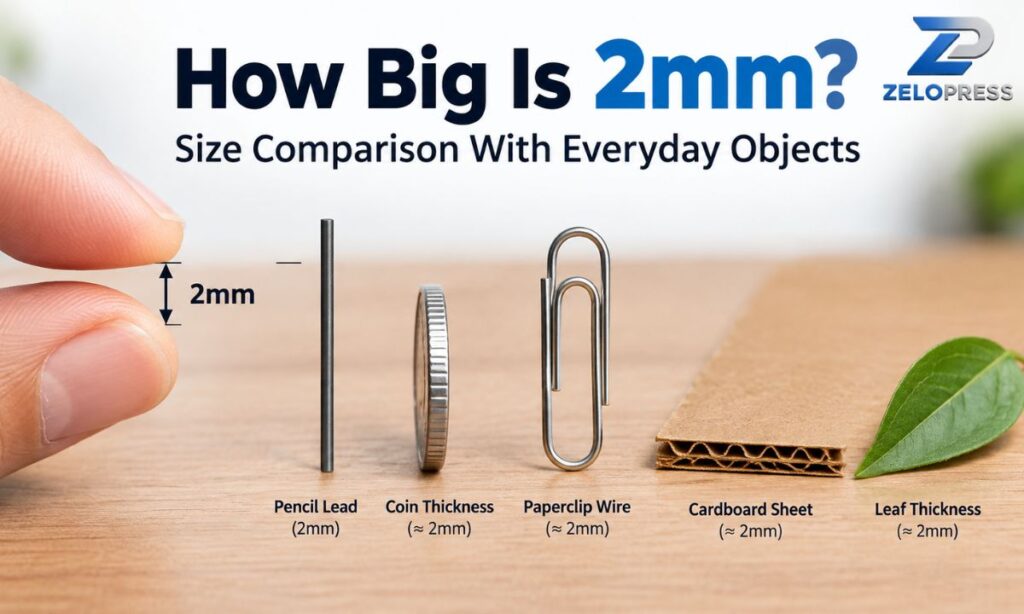

Two millimeters doesn’t sound like much — and it isn’t. But it’s also not so small that you can’t see it, hold it, or work with it. That’s exactly what makes 2mm tricky to picture. It sits in an awkward middle zone: big enough to matter, small enough to misjudge.
If you’ve ever squinted at a ruler trying to figure out exactly where 2mm falls, or wondered what it looks like without pulling out a measuring tool at all, this guide will settle it for good. Below, you’ll find simple estimation tricks, real object comparisons, a quick-reference table, and answers to the questions people ask most often about this tiny but useful measurement.
How Big Is 2mm?
Two millimeters equals about 0.0787 inches, or roughly 5/64 of an inch if you’re working with a standard tape measure. In everyday terms, that’s a little less than one-tenth of an inch — small, but clearly visible to the naked eye.
A helpful anchor: 2mm is close to the thickness of a single nickel. Pull one out of your pocket, stand it on its edge, and that’s almost exactly the size you’re picturing. It’s also roughly the width of a standard pencil tip or two stacked credit cards.
Millimeters this small show up constantly in daily life without most people noticing — in jewelry posts, tile spacers, screws, seeds, and even the thickness of your phone’s glass screen.
Ways to Estimate 2mm Without a Ruler
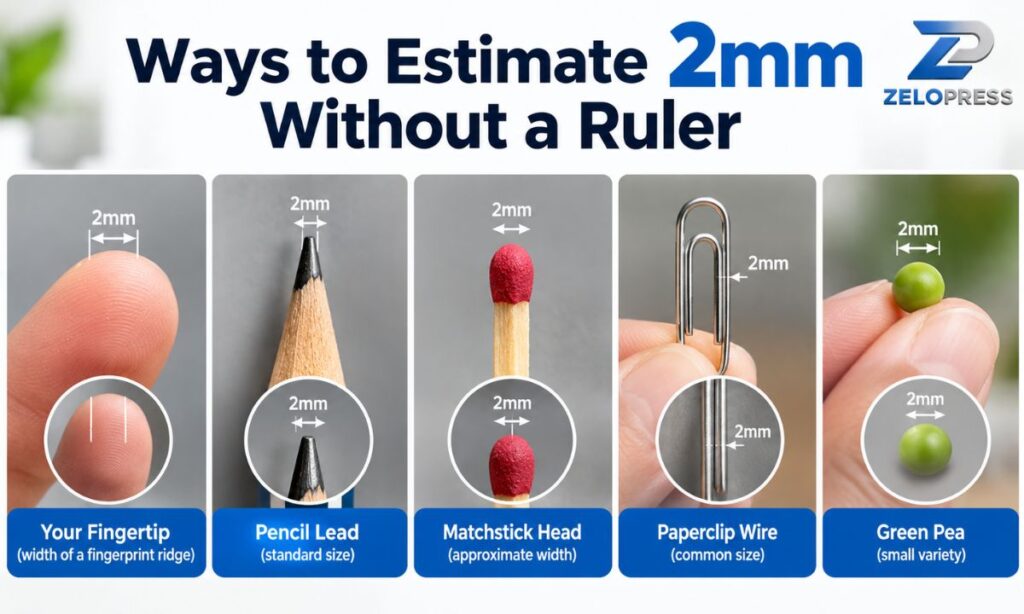
You don’t always have measuring tools handy. Fortunately, your body and common household items can get you remarkably close.
What is 2mm in cm
Since 1 centimeter equals 10 millimeters, 2mm is simply 0.2cm. If you’re looking at a ruler, it’s the second small line after the centimeter mark — a gap so narrow it’s easy to overlook.
Using Your Fingers
Your fingernails offer a surprisingly reliable reference. The thin white edge at the tip of a fingernail is usually around 1mm, so two of those stacked together get you close to 2mm. Alternatively, the width of a single strand of thick spaghetti (uncooked) lands in a similar range.
Read More Measurement : How Big Is 2mm?
Using Coins or Cards
Coins and cards are some of the most convenient comparison tools since almost everyone has them nearby:
- A US nickel is about 1.95mm thick — essentially 2mm on its own.
- Two standard credit cards stacked together measure close to 1.5–2mm, since each card is roughly 0.76mm thick.
- Two dimes stacked reach about 2.7mm, slightly over but still a useful visual guide.
2mm Scale
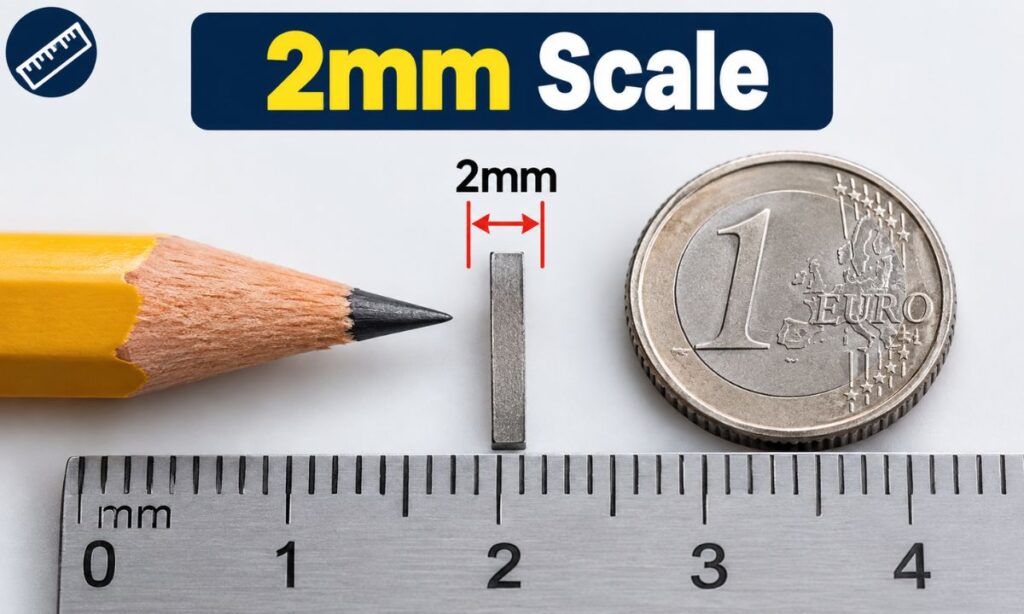
When designers or engineers refer to “2mm scale,” they usually mean a level of precision where even a slight miscalculation changes the outcome. In model-making or miniatures, a 2mm scale detail is the kind of feature you’d need a magnifier to sculpt accurately, since it represents the smallest increment that still reads as intentional rather than accidental.
Using Common Small Objects
Seeds, beads, and craft supplies are some of the easiest real-world stand-ins for 2mm because they’re already sitting in most kitchens and craft drawers.
2mm ruler
If you’re using an actual ruler, look at the metric side. Each numbered line marks a full centimeter, and the small unmarked ticks between them represent single millimeters. Count two ticks in from any centimeter line, and that gap is your 2mm reference point.
Quick Comparison Table
| Object | Approximate Size | How It Compares to 2mm |
| Sesame seed | 2mm long | Nearly identical match |
| Pencil lead (standard) | 2mm wide | Matches exactly |
| Small jewelry bead | 2mm diameter | Common bead size |
| Rock salt grain | 1.5–2mm | Slightly smaller to equal |
| Mechanical pencil tip | 2mm wide | Matches exactly |
| Tiny screw head | 2mm diameter | Common hardware size |
| Mustard seed | 1–2mm diameter | Slightly smaller to equal |
| Earphone wire | 1.5–2mm thick | Close match |
| Craft foam sheet | 2mm thick | Standard thickness |
| Watch gear part | 1–2mm | Slightly smaller to equal |
Sesame Seed Length
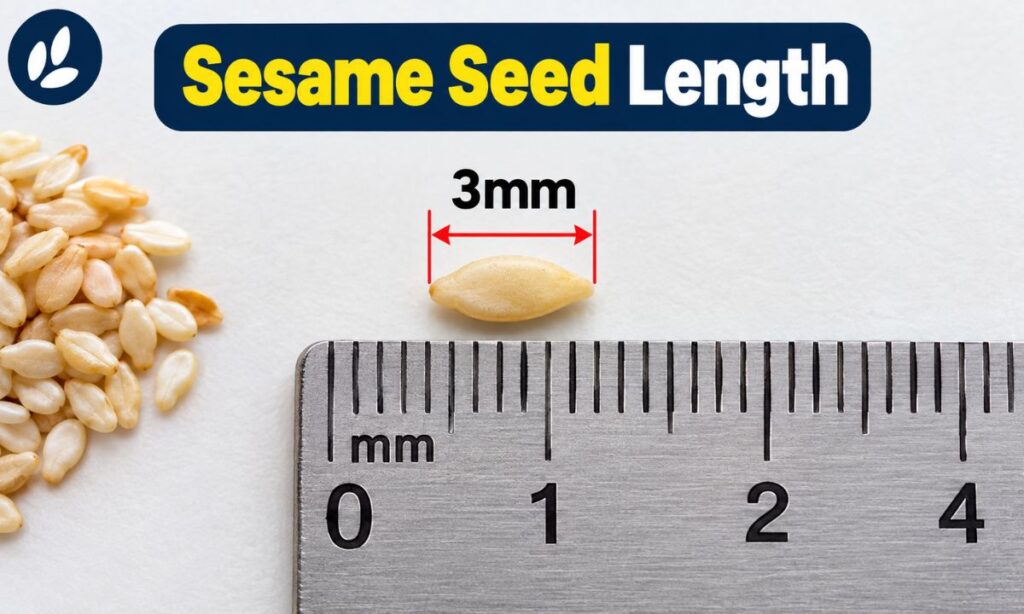
A single sesame seed measures almost exactly 2mm in length, making it one of the most relatable comparisons available. Since sesame seeds appear on burger buns and bread almost everywhere, this is a comparison nearly anyone can picture without leaving their kitchen.
Pencil Lead Width
Standard pencil lead used in everyday writing pencils is close to 2mm wide. It’s a comparison most people can test immediately, since a pencil is probably within arm’s reach right now.
Small Jewelry Bead
Tiny seed beads used in bracelets and earrings are frequently manufactured at 2mm in diameter. Jewelry makers rely on this size specifically because it’s small enough for delicate designs but still easy to string by hand.
Grain of Rock Salt
A coarse grain of rock salt typically falls between 1.5mm and 2mm, giving you a texture-based comparison rather than just a visual one. If you’ve ever felt coarse salt between your fingers before grinding it, you’ve already handled something close to 2mm.
Mechanical Pencil Tip
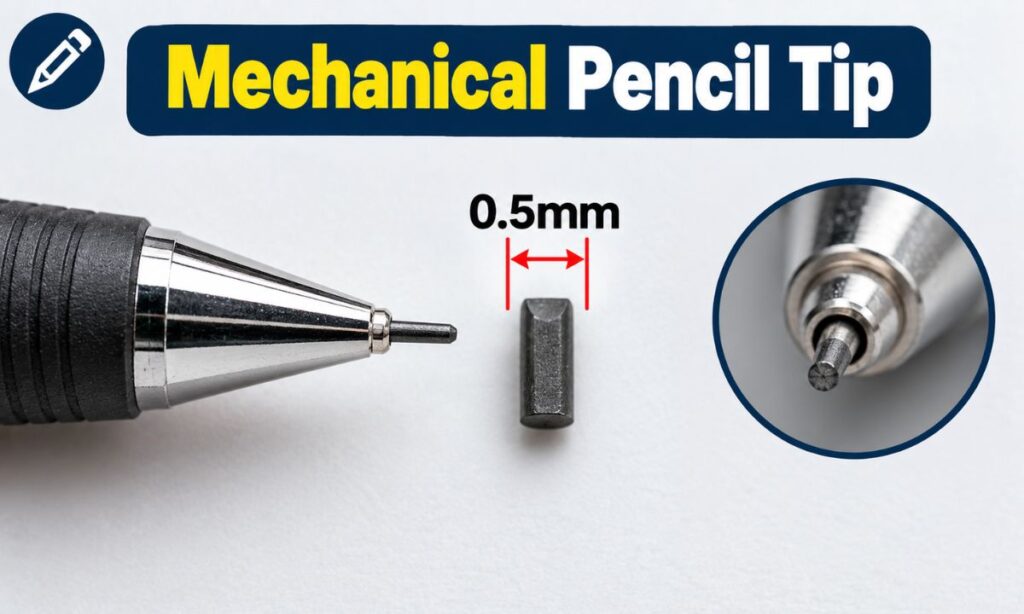
While most mechanical pencils use thin 0.5mm or 0.7mm leads, some drafting and sketching pencils use thicker 2mm leads specifically for bold technical lines. These thicker leads are popular among architects and artists who need durability along with dark, visible strokes.
Tiny Screw Head
Many small screws used in eyeglasses, electronics, and miniature hardware have heads measuring around 2mm across. It’s a size small enough to require a precision screwdriver, which is why eyeglass repair kits typically include one.
Small Mustard Seed
Mustard seeds generally measure between 1mm and 2mm in diameter, depending on the variety. Despite their small size, they’re a familiar kitchen item, which makes them a practical mental reference for this measurement.
Earphone Wire Thickness
The insulated wire on standard wired earphones is often close to 2mm thick, including the protective coating. Next time you untangle a pair of earbuds, take a second to notice just how slim that wire actually is.
Thin Craft Foam Sheet
Craft foam sheets sold for classroom projects and DIY crafts are frequently manufactured at a 2mm thickness. It’s thin enough to cut easily with scissors, yet sturdy enough to hold its shape in finished projects.
Small Watch Gear Part
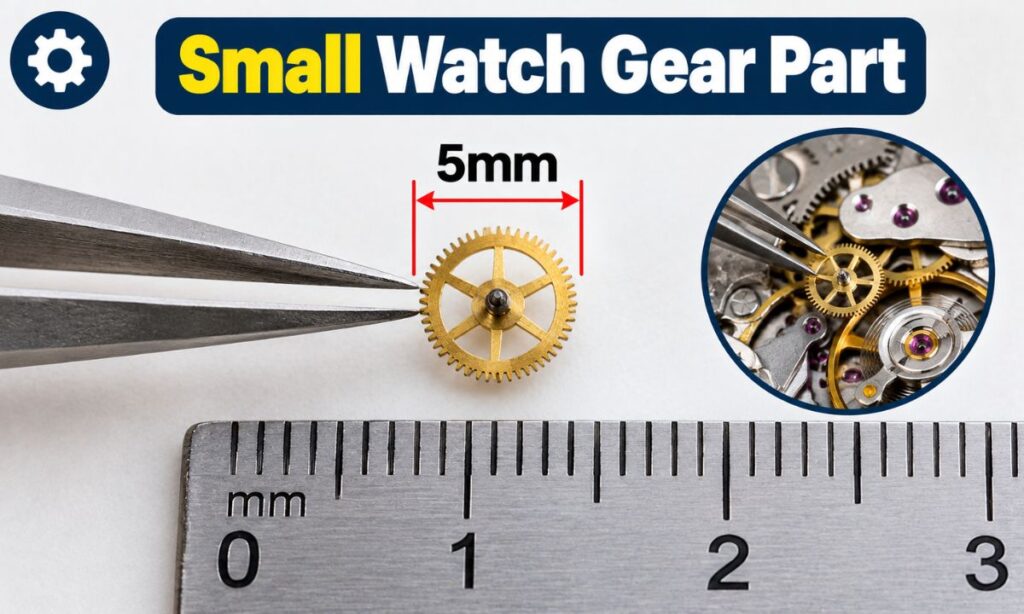
Inside mechanical watches, some of the smallest internal gears and components measure only 1–2mm across. This is part of why watch repair is considered such delicate, specialized work — a shift of even a fraction of a millimeter can throw off the entire movement.
Read More Measurement : How Big Is 2mm?
FAQs
How big is 2mm visually?
Visually, 2mm looks like the thickness of a nickel or the width of a standard pencil tip — small but clearly visible without magnification.
What is an example of 2mm?
A sesame seed or a standard pencil lead are two of the most common everyday examples of something measuring 2mm.
How long is 2 mm?
2mm is about 0.2cm or 0.0787 inches long, roughly one-twelfth of an inch.
What size is 2 mm?
2mm is a small but visible measurement, comparable to the thickness of two stacked credit cards or a single nickel coin.
How to measure 2mm?
Use the metric side of a ruler and count two small tick marks past any centimeter line, or compare against a nickel’s thickness if no ruler is available.
Final Thought
Two millimeters may be easy to overlook on paper, but once you connect it to real objects — a sesame seed, a nickel’s edge, a pencil tip — it becomes far easier to picture and measure with confidence. Next time you need a quick size check without a ruler in hand, one of these everyday comparisons will get you there.