
Ten millimeters is one of those measurements that sounds small on paper but shows up everywhere once you start looking for it — in tool drawers, jewelry boxes, junk drawers, and even your pocket change. Since 10mm equals exactly 1 centimeter, it’s a clean, easy number to work with, yet most people still struggle to picture it without a ruler in hand.
This guide walks through exactly how big 10mm is, how to estimate it using things you already own, and nine everyday objects that match this size almost perfectly.
How Big Is 10mm?
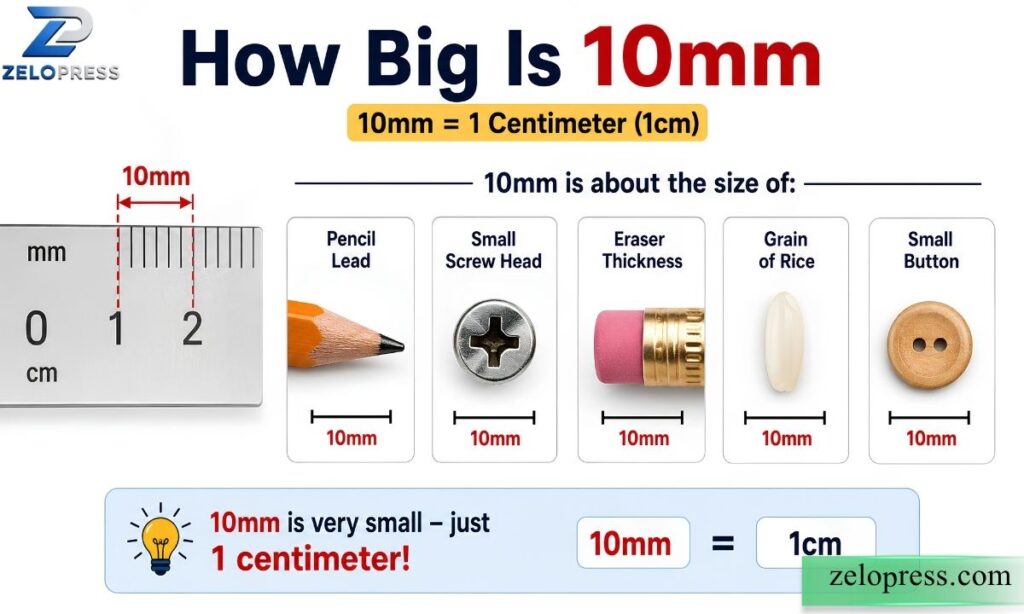
Ten millimeters equals 1 centimeter, or about 0.39 inches — just a hair under half an inch. It’s large enough to see clearly and handle comfortably, but still small enough to fit on a fingertip.
For context:
- 10mm is roughly the width of a standard pencil eraser
- It’s close to the diameter of a small pea or chickpea
- It’s about the size of a medium shirt button
This measurement is common in hardware, jewelry, electronics, and craft supplies because it hits a practical middle ground — big enough to grip and work with, small enough to stay compact.
Read More Measurement ; how big is 10mm
Measurement Without a Ruler
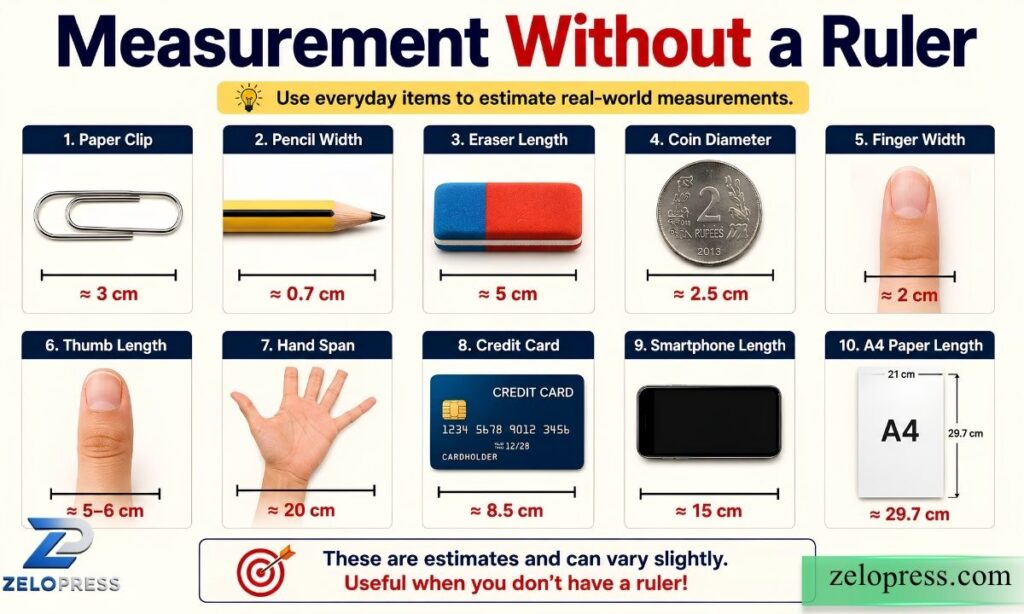
You don’t always have a tape measure on hand, and that’s fine. There are a few quick, reliable ways to estimate 10mm using nothing but your own body or common objects.
Finger Width
The width of an average adult index finger, measured across the middle knuckle, lands close to 10mm. This makes your own finger one of the fastest reference tools available:
- Press your fingertip against the object you’re estimating
- If it matches your finger’s width almost exactly, you’re likely looking at something close to 10mm
- This trick works well for quick comparisons while shopping or doing DIY projects
What does 10 mm look like?
Picture a small round bead or a chickpea resting in your palm. That’s roughly the visual size of 10mm — noticeable, easy to pick up, and clearly visible without needing to squint. It’s not tiny, but it’s still small enough to lose track of if you’re not paying attention.
Pencil Eraser
A standard pink eraser attached to a wooden pencil is one of the most reliable comparisons for 10mm. Most pencil erasers measure close to this width when viewed from the end, which is why this comparison shows up so often in size guides. Since pencils are found in almost every home, office, and classroom, this reference works well for nearly anyone trying to visualize the size without pulling out a ruler.
Small Bead or Pea
Craft beads and garden peas both commonly measure around 10mm across. A pea is naturally round and familiar from the kitchen, while a bead offers a firmer, more uniform shape for comparison. Both examples are useful because they’re easy to hold between two fingers, giving you a hands-on sense of exactly how much space 10mm actually takes up.
10mm to inches fraction
Converting 10mm to inches is simple:
10mm ÷ 25.4 = 0.3937 inches
In fraction form, this rounds closest to 25/64 of an inch, which for practical purposes is often simplified to just under 3/8 inch. This conversion matters most when comparing product listings, hardware specs, or jewelry sizes that use different measurement systems.
Quick Size Comparison Table
| Object | Approximate Size |
| Pencil eraser width | 10mm |
| Small pea or bead | 9–10mm |
| Shirt button | 10mm |
| Socket wrench opening | 10mm |
| Earbud tip diameter | 9–10mm |
| USB cable thickness | 8–10mm |
| Watch crown | 6–10mm |
| Ring band width | 4–10mm |
| Small marble | 10mm |
Pencil Eraser Width
Looking specifically at width rather than length, most standard pencil erasers measure right around 10mm side to side. This makes the eraser one of the most repeatable, consistent comparisons available since manufacturers design them within a fairly narrow size range. It’s a comparison that works whether you’re picturing a classic yellow #2 pencil or a mechanical pencil’s replacement eraser.
Medium Craft Bead
In beading and jewelry supply stores, a 10mm bead is generally labeled as a “medium” size — larger than delicate seed beads, but smaller than chunky statement beads. This size is popular for bracelets, beaded keychains, and layered necklaces because it’s substantial enough to see clearly on a strand while still feeling balanced rather than bulky.
Small Shirt Button
Buttons found on shirts, blouses, and light jackets are frequently close to 10mm in diameter. This size gives enough surface area to fasten easily through a buttonhole while staying proportionate to the fabric and stitching around it. If you glance down at a button-up shirt right now, there’s a good chance the buttons are close to this exact measurement.
What size is equal to 10 mm?
Since 10mm equals exactly 1 centimeter, anything labeled as “1cm” in size is automatically equal to 10mm. It’s also equal to about 0.39 inches, making it slightly smaller than half an inch on any standard ruler.
Socket Wrench Opening
A 10mm socket is one of the most commonly used sizes in any mechanic’s or DIY toolbox, fitting a wide range of bolts found in cars, furniture, and appliances. Because this size is so frequently needed, most socket sets include it as a standard, everyday piece rather than a specialty attachment.
Earbud Tip Diameter
Many wired and wireless earbud tips measure close to 10mm across at their widest point. This size is chosen to fit comfortably inside a typical ear canal while still creating a secure seal for sound quality. If you’ve ever swapped earbud tips for a better fit, you’ve likely handled a piece right around this measurement.
USB Cable Thickness
The outer diameter of many charging and USB cables falls between 8mm and 10mm, depending on the cable’s build and shielding. Thicker cables designed for durability or faster charging often sit right at the top of this range, making 10mm a useful benchmark when comparing cable types.
Watch Crown
The small crown on the side of a wristwatch — the knob used for setting the time — often measures close to 10mm in diameter on larger watch models. This size allows for a comfortable grip between two fingers while staying proportionate to the watch case itself.
How big is 10mm on a ruler
On a metric ruler, 10mm lines up exactly with the 1-centimeter mark, since 10 millimeters make up one full centimeter. If you’re using an imperial ruler without metric markings, look just under the 3/8-inch line, since that’s the closest fractional match.
Ring Band Width
While most everyday rings have narrower bands, wider fashion rings and some men’s bands can reach up to 10mm across. This width sits at the upper end of standard ring sizing, offering a bold, noticeable look compared to slimmer, more delicate band styles.
Small Marble
Smaller marbles used in classic games and craft projects commonly measure right around 10mm in diameter. This size is large enough to roll smoothly and hold comfortably, making it a popular choice for both traditional marble games and decorative vase fillers.
Read More Measurement ; how big is 10mm
FAQs
Is 10mm the same as 1 centimeter?
Yes, 10mm equals exactly 1 centimeter.
What household item is 10mm?
A pencil eraser and a medium shirt button are both close to 10mm.
How can I measure 10mm without a ruler?
Use the width of your index finger or a small pea as a quick estimate.
Is 10mm bigger than a dime?
Yes, a US dime is about 17.9mm across, so it’s nearly twice the size of 10mm.
What socket size is 10mm used for?
A 10mm socket fits many common bolts on cars, furniture, and appliances.
Summary
Ten millimeters might sound like an abstract number, but it’s a size you encounter constantly — from the eraser on your pencil to the socket in your toolbox. By comparing it to familiar objects like beads, buttons, and coins, this measurement becomes far easier to picture and estimate without ever reaching for a ruler. The next time you spot “10mm” on a label, you’ll already have a clear mental image to match it to.